
I run SEO on a CRM I built called Seedly, and I do almost none of the things the backlink "gurus" tell you to do. No cold outreach. No buying links off Fiverr. No guest-post begging.
Instead I borrow other people's authority. It's called parasite SEO, and the hardest part is just knowing which sites to plant your content on. So let me show you exactly how I find them, and hand you 6 sites I'm using right now.
What parasite SEO actually is
Parasite SEO means publishing your content on a domain that already has massive authority, with a link back to your own site inside it.
Google trusts gitbook.io or medium.com way more than it trusts my brand-new seedlycrm.com. So instead of waiting years to earn that trust myself, I publish a genuinely useful page ON those platforms, link back to my site, and ride their authority. The page ranks, people read it, some of them click through to me.
The catch is picking the right host platforms. Plant your content on a dead, deindexed site and you get nothing. So here's how I find the good ones.
The network graph trick
This is the part nobody shows you. I use SEMrush's Backlink Analytics, specifically the Network Graph view.
Here's the move. Take a domain in your niche that already does well, drop it into Backlink Analytics, and open the Network Graph. You get a map of every site connected to it by links, color-coded by category.
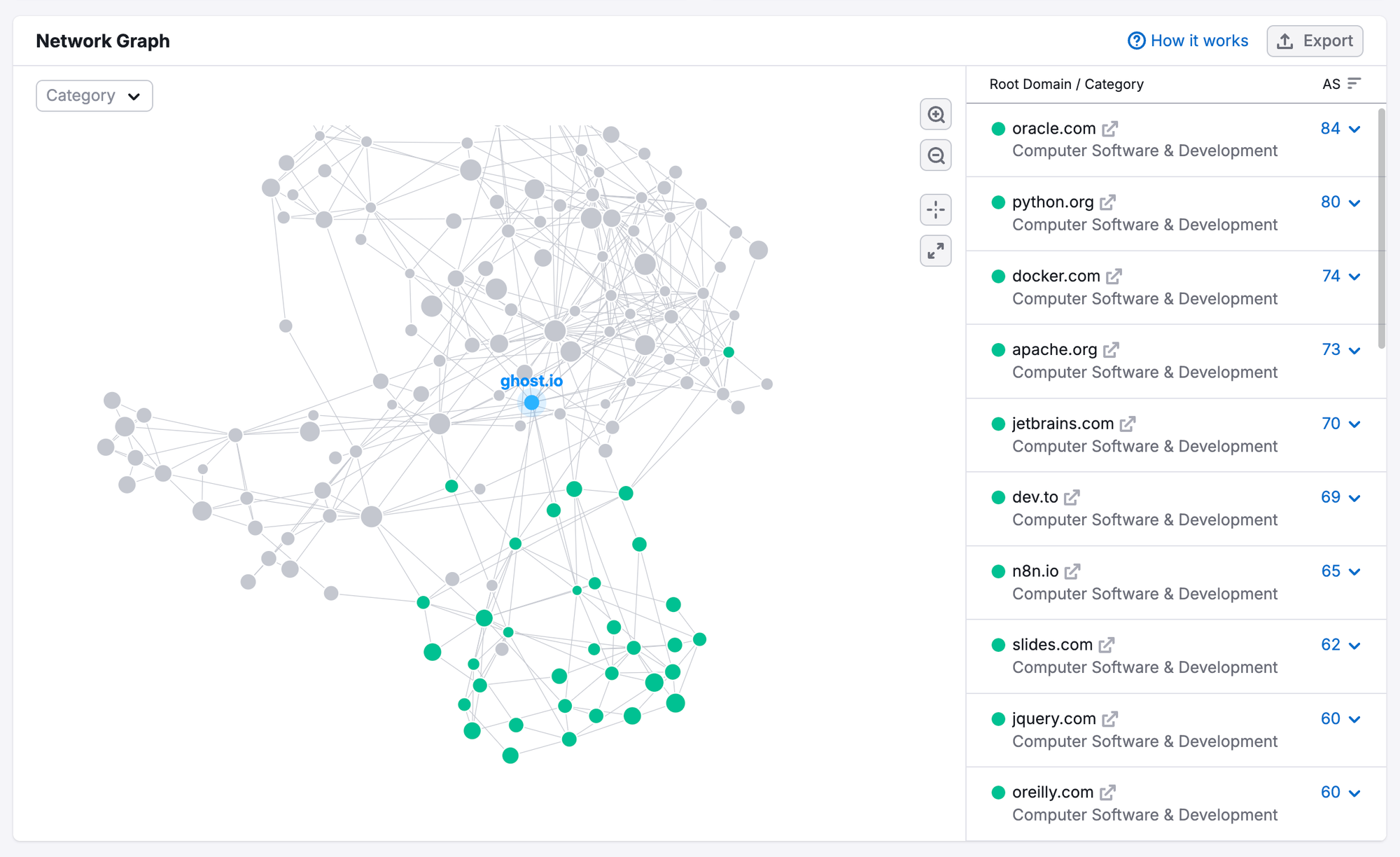
That green cluster at the bottom? Those are all the "Computer Software and Development" domains in the same link neighborhood. oracle.com, python.org, docker.com, jetbrains.com, dev.to, n8n.io, slides.com. Every one of those is a high-authority domain that lives in my category.
Some of them are companies I can't post on. But a bunch of them are platforms that let ANYONE publish: dev.to, slides.com, and once you start clicking around the cluster you find the gitbook.io and notion.site type sites too. That green blob is basically a treasure map of where to go plant your links.
The whole method in three steps:
- Find a respected domain in your niche (a competitor, a tool you use, a popular blog).
- Run it through SEMrush Backlink Analytics and open the Network Graph.
- Filter by your category and write down every domain that lets users publish. That's your hit list.
You can do a lighter version of this in Ahrefs or even the free Moz tools, but the visual graph is what makes the platforms jump out at you.
The 6 sites I'm using right now
You don't have to take my word for it. Here are 6 I'm actively publishing on for Seedly. All free, all high authority, all real.
1. Blogger - You're reading this on it. It's owned by Google, which does not hurt. Free, indexes fast, and blogspot subdomains carry real weight.
2. GitBook - A documentation platform with serious domain authority. If your product is technical at all, a GitBook guide with a link home is gold. That link goes to the one I built for Seedly.
3. Medium - The classic. Huge authority, built-in readership, and a clean dofollow-ish link environment if you write something people actually read.
4. Substack - Newsletter platform, but every post is also a public web page on a high-authority domain. Two channels for one piece of writing.
5. Notion - Make any Notion page public and it becomes an indexable page on a domain Google already loves. That link is a live calculator I published. Underused for this.
6. Wix - A full free website on a high-authority builder domain. Spin up a simple site or blog, link it home, and you've got a clean indexable property where you control the whole layout.
Notice something? Several of those (dev.to, plus the platforms sitting next to it) showed up in that exact green cluster on the graph. The method points you right at them.
How to not waste the link
Two rules I never break.
First, the content has to be real. A thin 200-word post with a keyword-stuffed link gets ignored or removed. I write the same quality I'd put on my own site. The data audit post I syndicated out performed because it was actually useful, not because it had a link in it.
Second, point everything back to one hub. All 6 of these link to my main blog at seedlycrm.com. That way the authority doesn't scatter. It compounds on the one site I actually own. If you want to see the kind of content I push out across the network, this CRM data audit post is a good example of the format I use everywhere.
Does it actually work
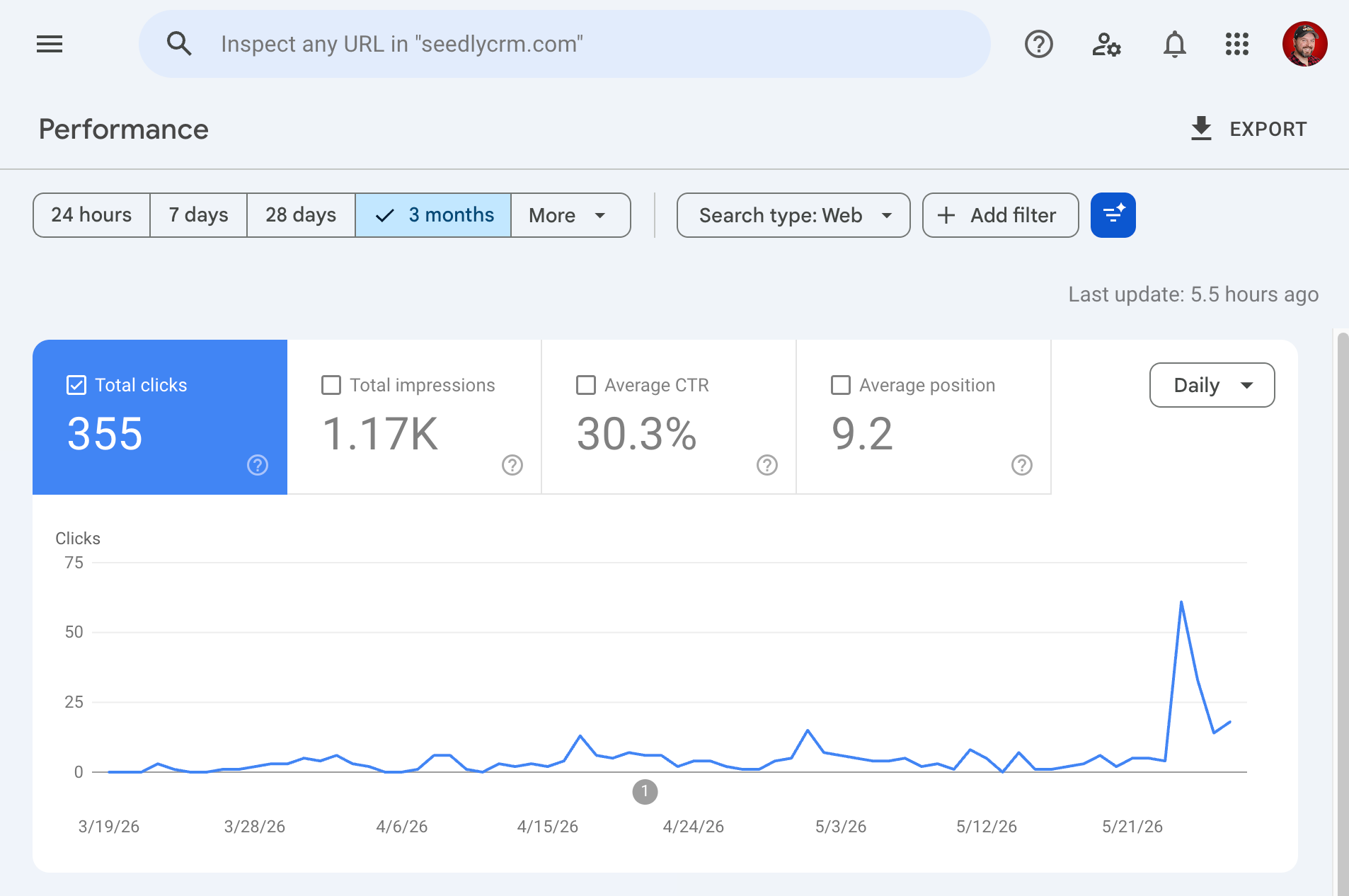
Yeah. Seedly went from zero to a steady stream of search clicks in about three months on this, no paid ads, no outreach. The brand is new and the domain has basically no age, but the borrowed authority does the heavy lifting while my own site grows up.
Start with one platform from the list. Write one genuinely good post. Link it home. Then run the network graph trick and build your own list of 20 more.
The links are out there. You just have to know which blob on the map to look at.
Comments
Post a Comment